Babatu and the battle of Sandema
Babatu was a Zarma warlord who led slave raids across what is now northern Ghana in the late 19th century. The Builsa defeated his forces at the battle of Sandema, and Fiok remembers that stand.12
The festival is said to have begun as household thanksgivings for good crops before it became a public celebration, and it is seen as a source of Builsa identity and solidarity.3
What happens
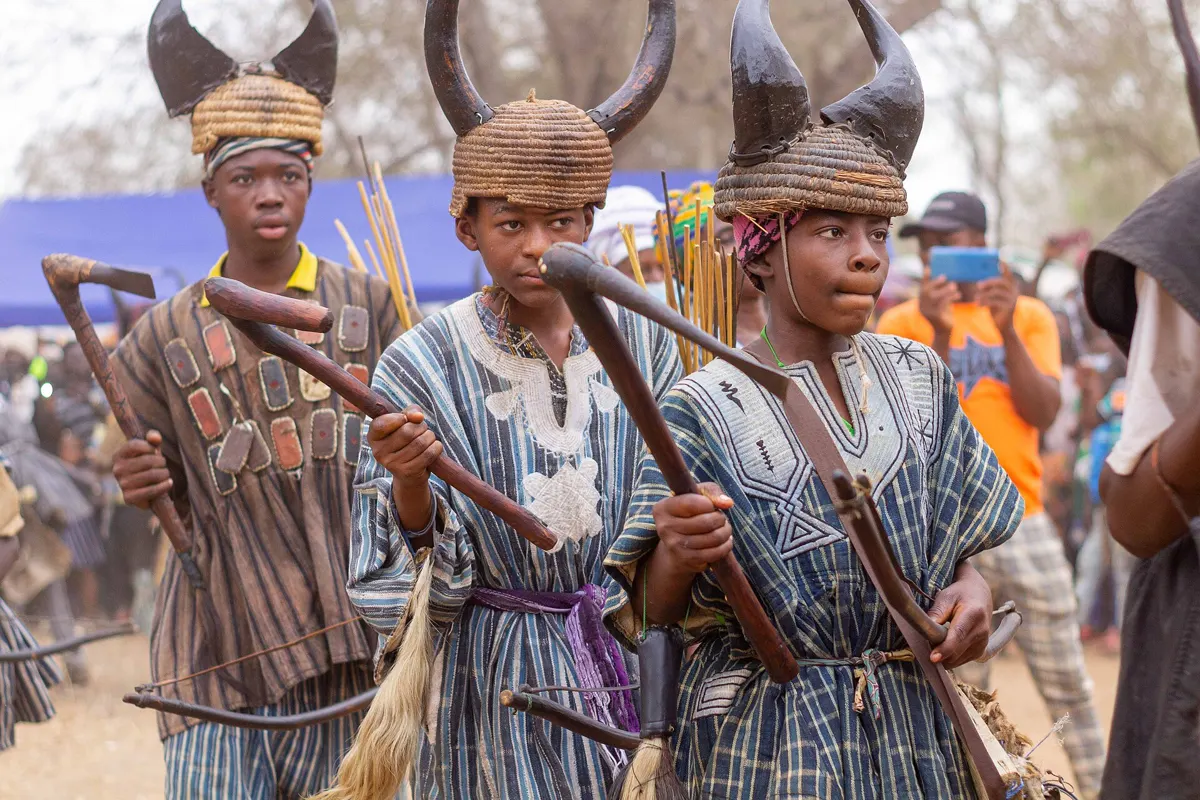
The festival opens with libations to the ancestors for peace and prosperity.3 Then dancers armed with bows and arrows, short axes, shields and spears, many in horned headdresses, re-enact the resistance and Babatu’s defeat.12 The 2024 edition was held at Sandema on 21 December, under the theme of peace as a tool for development.2
Good to know if you go
- Where: Sandema is the Builsa capital, west of Navrongo and Bolgatanga.
- Weather: December is harmattan season in the north: dry, dusty and cool at night.
- Check the dates: the traditional council sets the days each year, often only weeks ahead. Local radio and the national press carry the announcement.
- Respect the rites: some rituals are sacred and not for cameras. Ask before photographing chiefs, priests or anyone taking part, and follow what the ushers ask.
Questions people ask
What is the Fiok festival?
The festival of the Builsa people at Sandema, remembering their victory over the slave raider Babatu with war dances.
When is Fiok?
Every December. In 2024 it was held on 21 December.
Who was Babatu?
A Zarma warlord who led slave raids across northern Ghana in the late 19th century and was defeated by the Builsa at Sandema.
Sources
- “Fiok festival”, Wikipedia.
- “Feok Festival”, Visit Ghana.
- “Fiok Festival: celebrating Builsa heritage, historic victory and traditional unity”, Ghana Remembers.
Last checked 16 October 2026. Spotted something wrong or know this year’s dates? Tell us.